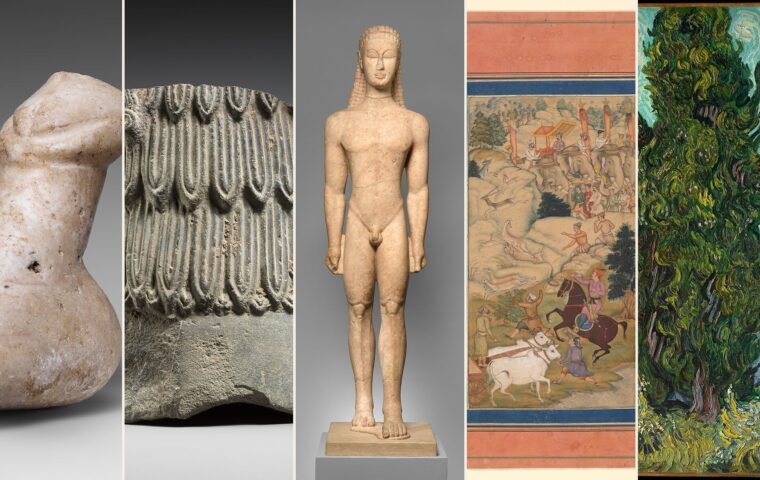
Key points
- To read a work of art, move from observation to interpretation: describe what is visible, examine composition and material, identify subject and context, then test possible meanings against evidence.
- Look for the first visual pull, repeated shapes, edges, contrasts, bodily scale, signs of making, damage, display height and what the work withholds.
- Interpretation is not a guessing game. Separate what you see, what you infer and what a reliable source confirms.
In this article
Before reading the wall label, stand still for thirty seconds and notice where your eye goes first. To read a work of art, move from observation to interpretation: describe what is visible, examine composition and material, identify subject and context, then test possible meanings against evidence. This article approaches How to Read a Work of Art through a repeatable method that moves from observation to evidence, keeping personal response close to verifiable observation. The purpose is not to turn looking into an examination, but to give curiosity a method it can reuse.
Begin with observation
The method works in a museum, a classroom, a gallery viewing room or at home, and it helps readers avoid both empty description and overconfident symbolism. The method begins by separating three activities that are often collapsed: describing what is visible, inferring what it might mean and verifying what reliable evidence supports. Repeat that sequence until it becomes instinctive. It gives personal response a stronger foundation without making looking feel like an examination. In this case, a portrait whose gaze controls the room and a sculpture whose silhouette changes as you walk offer two different points of entry: one can establish the larger argument while the other tests how well it holds at the level of a particular work or practice.
A repeatable method
Among the recurring materials are line, colour, light, surface, scale, weight, texture, frame, support and spatial arrangement. Their availability depended on geology, trade, workshop knowledge and wealth; their prestige could change across time and place. Even the smallest technical choice can carry social meaning. The pleasure of close looking grows when material is understood as an active part of the argument. For How to Read a Work of Art, place special attention on line and colour: their behaviour helps explain why the work looks, moves, ages or circulates as it does.
Material evidence
Representative works and practices include a portrait whose gaze controls the room; a sculpture whose silhouette changes as you walk; a miniature painting that rewards close viewing; a photograph organised by absence. Their fame is uneven, often shaped by excavation, collecting, reproduction and museum display. Placing a celebrated object beside a less familiar form can correct the scale of the story. It also reveals how canons are made. Move first through a portrait whose gaze controls the room, then compare it with a sculpture whose silhouette changes as you walk; keep a miniature painting that rewards close viewing nearby as a reminder that no single celebrated example can carry the whole field.
Context without intimidation
Labels can guide understanding but can also make viewers stop looking. Personal response matters, yet it should not replace historical evidence. The disagreement is productive because it forces closer attention to language and evidence. Museum labels, market descriptions and popular retellings may each emphasise different interests. Comparing them is part of learning how authority is constructed. For How to Read a Work of Art, museum records, archaeological reports, conservation studies, primary documents and later retellings may emphasise different facts; the differences between them are themselves historically useful.
Common mistakes
A close reading should attend to the first visual pull, repeated shapes, edges, contrasts, bodily scale, signs of making, damage, display height and what the work withholds. Try changing your distance from the image or walking around the object when display permits. Bodily movement can reveal rhythm, balance and scale that a frontal photograph conceals. The work may organise you before you organise it. For How to Read a Work of Art, let the eye move deliberately from the first visual pull to repeated shapes and then outward toward edges; changing distance often reveals how attention has been organised. Describe what is visible before translating every detail into symbolism, then test a possible interpretation against the object record and historical context.
Putting the method into practice
A repeatable way of looking turns museum visits into active encounters and makes later research more precise. The subject continues because later artists and viewers have found new uses for it, sometimes admiring, sometimes resisting and sometimes transforming its language. Influence is rarely a straight line. It is better understood as repeated acts of translation. In the case of How to Read a Work of Art, later display, photography, textbooks, restoration, tourism, collecting and digital circulation have each selected certain qualities while making others harder to notice.
Questions, cautions and responsible interpretation
Interpretation is not a guessing game. Separate what you see, what you infer and what a reliable source confirms. Collection histories and modern titles can be provisional. Use the institution’s current record, then note significant debate or uncertainty when it affects meaning. Keep three columns in mind for How to Read a Work of Art: what the eye can verify, what a document confirms and what a scholar, market participant or community proposes. Where those columns do not align, explain the gap. Precision does not diminish beauty; it gives curiosity a more trustworthy foundation.
A final way to see the subject
The method becomes convincing only through practice. Try it on one painting and one three-dimensional object, then compare your first notes with what research changes. Return to the opening image of How to Read a Work of Art and notice how line, the first visual pull and the example of a portrait whose gaze controls the room have changed the first impression. A repeatable way of looking turns museum visits into active encounters and makes later research more precise. Continue by placing a portrait whose gaze controls the room beside a sculpture whose silhouette changes as you walk, then follow the institutional record for a miniature painting that rewards close viewing; the comparison will expose which parts of the story are visual, documentary or interpretive. That shift—from quick recognition to a sustained relationship—is the habit The Easel wants every article to cultivate.