Key points
- The Ajanta cave paintings form a major Buddhist visual archive of narrative, devotion, courtly life and monastic patronage, created in phases between roughly the second century BCE and fifth century CE.
- Look for flowing contour, lowered gaze, hand gesture, jewellery, crowded narrative, colour layering, damage, restoration history and the relationship between painting and sculpture.
- Colour and detail in photographs may be digitally enhanced. Always distinguish current condition, earlier copies and reconstructed appearance.
In this article
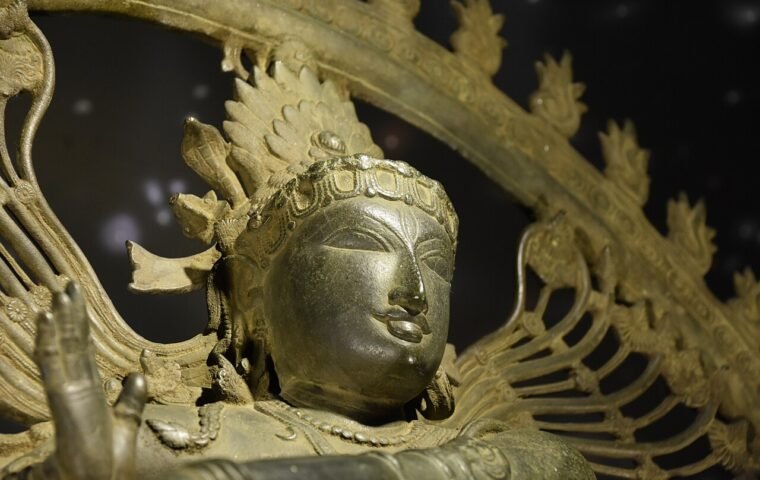
At Ajanta, a painted face emerges slowly from the dim wall, its glance shaped by line more than by shadow. The Ajanta cave paintings form a major Buddhist visual archive of narrative, devotion, courtly life and monastic patronage, created in phases between roughly the second century BCE and fifth century CE. This article approaches Ajanta Cave Paintings through movement through architecture, changing light and the experience of place, keeping visual pleasure close to documented history. The purpose is not to empty the subject of wonder, but to replace vague mystery with better questions.
A landscape made into art
Rock-cut monasteries and worship halls were excavated along a horseshoe-shaped gorge in western India. A site is experienced in sequence: approach, threshold, changing light, bodily scale, sound and the gradual appearance of images. Plans and photographs preserve only part of that encounter. To understand the art, reconstruct how architecture directed movement and how ritual or public use activated the space. In this case, Bodhisattva Padmapani and jataka narratives offer two different points of entry: one can establish the larger argument while the other tests how well it holds at the level of a particular work or practice.
Engineering, labour and materials
The object world includes rock-cut architecture, layered plaster, mineral and organic pigments, incised drawing, tempera-like painting methods and carved stone. These substances passed through extraction, preparation, exchange and specialised labour before becoming art. Their histories can expose trade routes and inequalities as clearly as iconography does. A responsible description keeps beauty and production in the same frame. For Ajanta Cave Paintings, place special attention on rock-cut architecture and layered plaster: their behaviour helps explain why the work looks, moves, ages or circulates as it does.
Narrative and sacred presence
Among the works and forms worth pausing over are Bodhisattva Padmapani; jataka narratives; court scenes; processions; animals; decorative ceilings; painted architecture. Each rewards a different speed of viewing, from the instant force of silhouette to the slow discovery of a painted detail. The contrast trains the eye to recognise how art directs attention. It also keeps the subject sensuous while the history becomes more complex. Move first through Bodhisattva Padmapani, then compare it with jataka narratives; keep court scenes nearby as a reminder that no single celebrated example can carry the whole field.
Moving through the monument
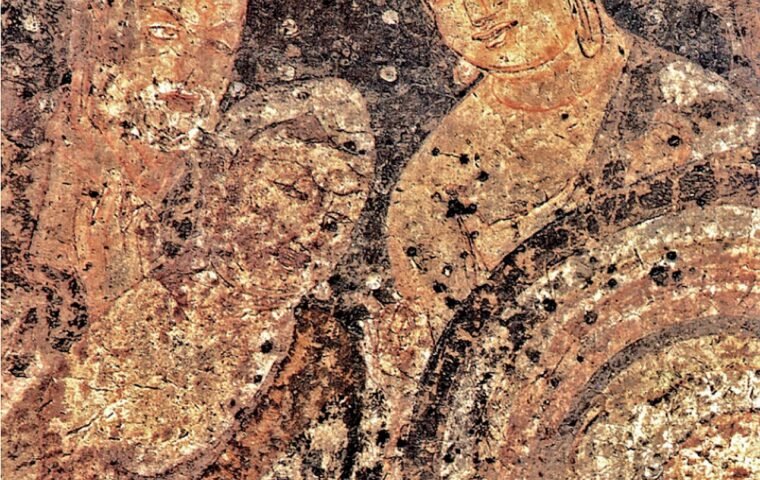
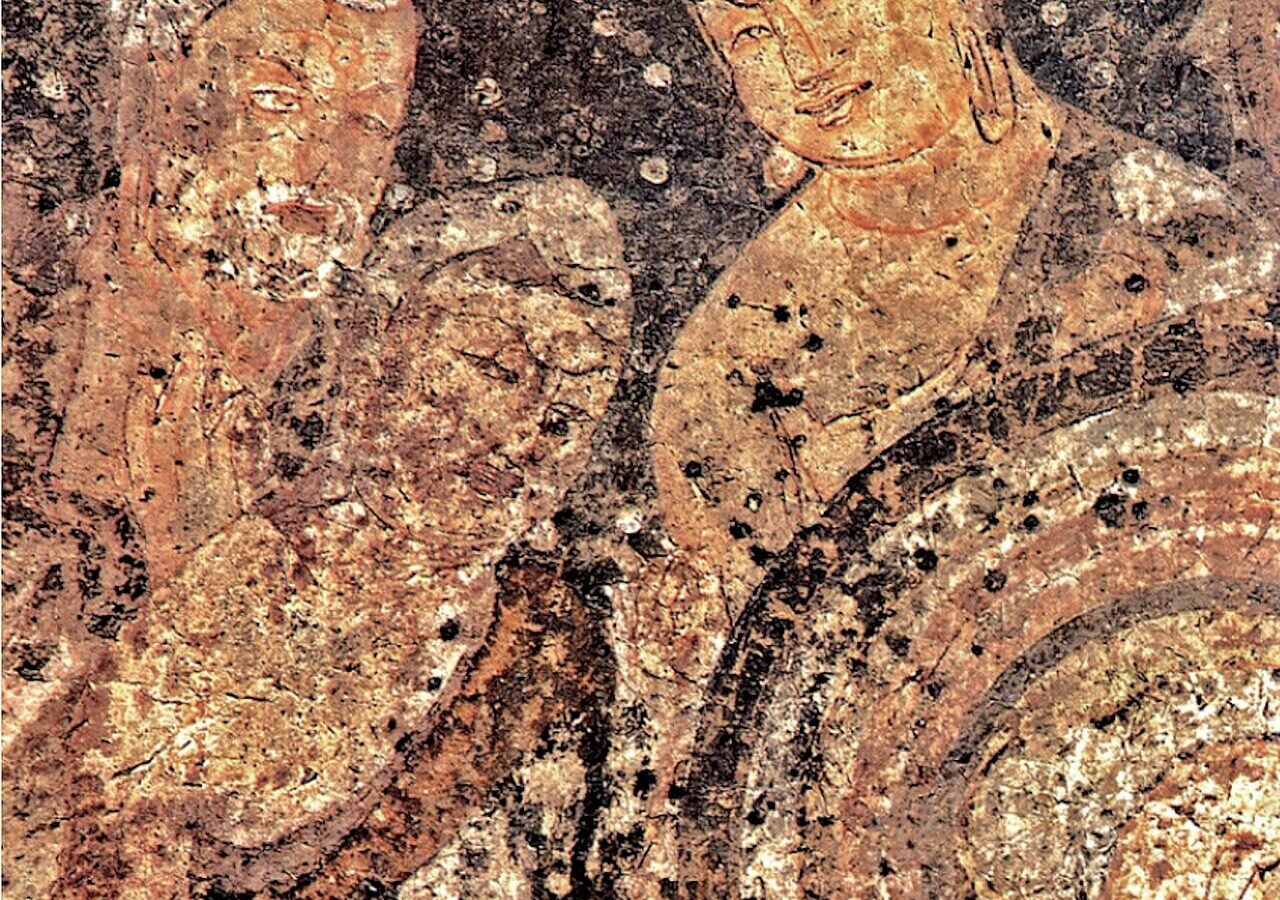
Reproductions isolate famous faces, but the paintings were part of dark architectural interiors, narrative sequences and ritual movement. This is where visual analysis and cultural history need one another. Form alone cannot settle the question, but context without looking becomes abstract. The strongest reading keeps returning from claim to object and back again. For Ajanta Cave Paintings, museum records, archaeological reports, conservation studies, primary documents and later retellings may emphasise different facts; the differences between them are themselves historically useful.
Conservation and modern viewing
Test the interpretation against flowing contour, lowered gaze, hand gesture, jewellery, crowded narrative, colour layering, damage, restoration history and the relationship between painting and sculpture. If the claim cannot be located in the visual or documentary evidence, qualify it. If the detail supports several readings, name the alternatives. Precision makes room for curiosity rather than closing it down. For Ajanta Cave Paintings, let the eye move deliberately from flowing contour to lowered gaze and then outward toward hand gesture; changing distance often reveals how attention has been organised. Describe what is visible before translating every detail into symbolism, then test a possible interpretation against the object record and historical context.
Why the site matters
Ajanta transformed the study of Indian painting and influenced modern artists, nationalist imagination and conservation practice. The subject remains available through archives and collections, but access is not equally distributed and not every history has been recorded with the same care. Future scholarship may alter the picture. A good overview leaves space for that change. In the case of Ajanta Cave Paintings, later display, photography, textbooks, restoration, tourism, collecting and digital circulation have each selected certain qualities while making others harder to notice.
Questions, cautions and responsible interpretation
Colour and detail in photographs may be digitally enhanced. Always distinguish current condition, earlier copies and reconstructed appearance. Do not allow price, fame or reproduction frequency to stand in for artistic importance. Those are separate histories that sometimes meet and sometimes conflict. Keep three columns in mind for Ajanta Cave Paintings: what the eye can verify, what a document confirms and what a scholar, market participant or community proposes. Where those columns do not align, explain the gap. Precision does not diminish beauty; it gives curiosity a more trustworthy foundation.
A final way to see the subject
A site is an artwork distributed through space. Plans and photographs are useful, but movement, sound, light and changing viewpoints complete the historical experience. Return to the opening image of Ajanta Cave Paintings and notice how rock-cut architecture, flowing contour and the example of Bodhisattva Padmapani have changed the first impression. Ajanta transformed the study of Indian painting and influenced modern artists, nationalist imagination and conservation practice. Continue by placing Bodhisattva Padmapani beside jataka narratives, then follow the institutional record for court scenes; the comparison will expose which parts of the story are visual, documentary or interpretive. That shift—from quick recognition to a sustained relationship—is the habit The Easel wants every article to cultivate.